

Beyond the Unknown. Annie's journey to her first 100km ultramarathon
At 72km, Annie reached her lowest point. At 85km, she knew she was going to finish. By 100km, she had achieved something she wasn't entirely sure she was capable of!
That's one of the things I love about coaching athletes. Sometimes the biggest achievement isn't the finishing time, the distance covered or the medal around someone's neck. It's the moment they realise they are capable of something they previously thought might be beyond them.
For Annie, that moment came during Race to the Stones, a 100km non-stop ultramarathon along the historic Ridgeway.
This was her first ultramarathon, and while she arrived at the start line physically prepared, there was still one question that no training session could completely answer.
Could she actually run 100km?
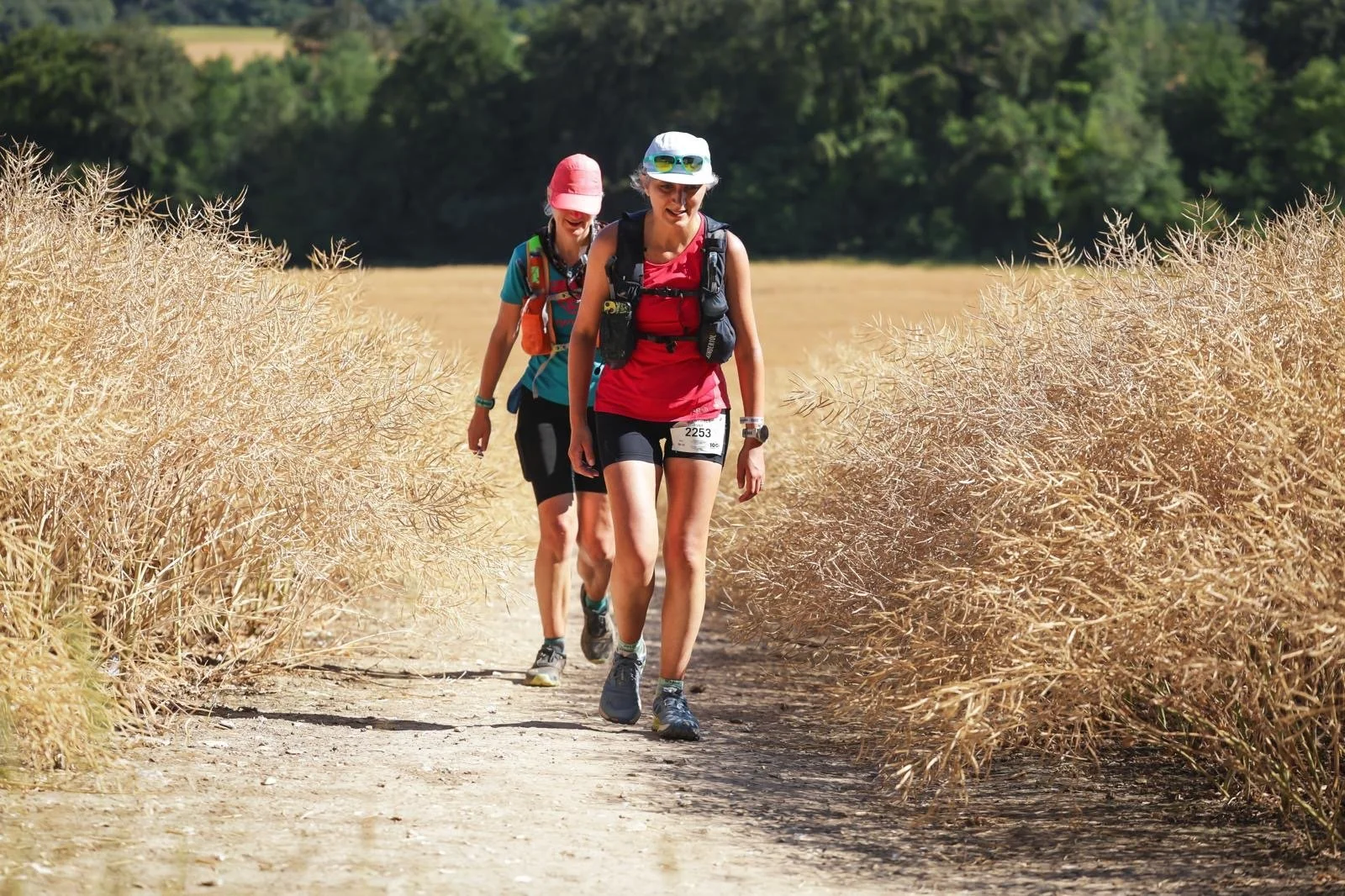
One foot forward, other follows in the heat.
Building the Foundations: From Half Marathon to 100km
Eleven weeks before Race to the Stones, Annie completed the Birmingham Half Marathon, recording her second fastest time over the distance. An excellent achievement in its own right, but the challenge ahead required a different approach.
Running a strong half marathon and completing a 100km ultramarathon are very different physical and psychological demands.
A half marathon rewards the ability to sustain a relatively high intensity. A 100km ultra places greater emphasis on aerobic endurance, muscular durability, pacing discipline, fuelling, and the ability to keep moving efficiently as fatigue accumulates.
As her coach, my responsibility wasn't simply to increase Annie's running volume. It was to develop a programme that prepared her for those demands while managing the associated training stress.
And importantly, those final 11 weeks were a continuation of her existing running fitness, not an attempt to build an ultrarunner from scratch.
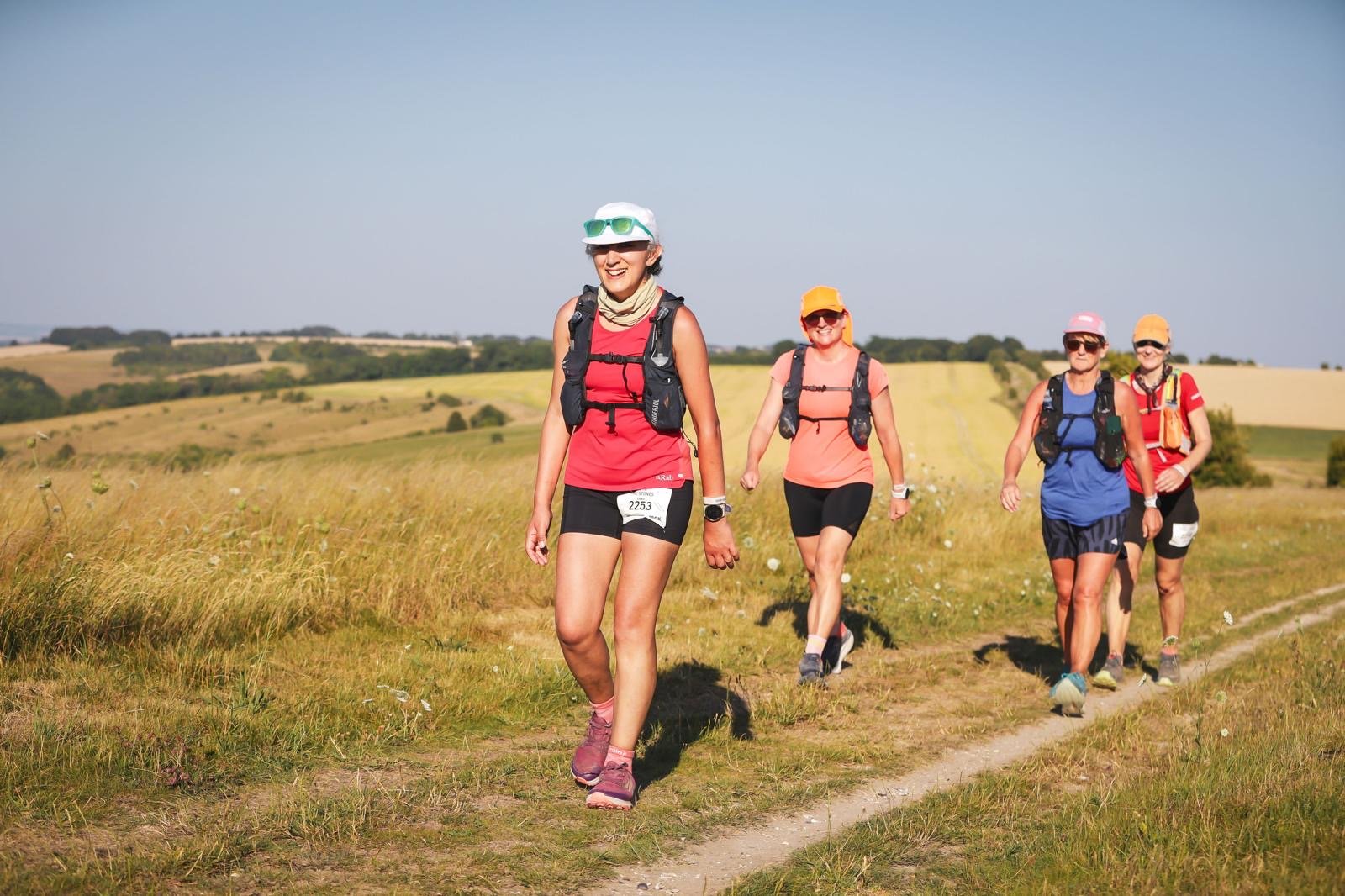
The heat beating down
The Training. Purpose Behind Every Session
One of the principles I follow at Trail Run West Midlands is that every training session should have a purpose. More training isn't automatically better training.
Looking at Annie's programme, we combined several important elements.
Aerobic Endurance and Steady State Running!
Regular endurance runs of approximately 60–90 minutes formed an important part of the programme, alongside sessions incorporating steady state efforts. These sessions helped maintain and develop the aerobic qualities required for prolonged running.
For ultramarathon athletes, aerobic capacity matters, but so does the ability to sustain a manageable intensity for many hours without accumulating excessive fatigue.
We weren't trying to make every run harder. We were trying to make Annie better equipped to sustain the effort required on race day.
Hill Training. Strength, Economy and Specificity!
We incorporated Kenyan Hills sessions, with efforts progressing from approximately two to four minutes.
Hill training provides a useful combination of cardiovascular stimulus and muscular loading. It also introduces the repeated changes in gradient, movement patterns and effort that athletes encounter on undulating trails.
Importantly, uphill running and downhill running place different demands on the body. Descending introduces substantial eccentric loading, particularly through the quads, which can contribute to muscular fatigue during prolonged trail events.
For Annie, the aim was to develop the physical qualities needed to negotiate varied terrain efficiently, rather than simply improve her uphill speed.
Back-to-Back Long Runs. Learning to Move on Tired Legs!
One of the most valuable parts of Annie's preparation was the inclusion of back to back long runs.
During the programme, we scheduled consecutive runs of approximately two and three hours, alongside individual long runs progressing towards three hours and forty-five minutes.
The rationale was straightforward.
A 100km event requires an athlete to continue moving long after the point where a conventional training run would normally finish.
Back to back sessions provided an opportunity to experience running with residual fatigue, while also practising pacing, fuelling and the practical demands of spending prolonged periods on her feet.
From a coaching perspective, this was about developing durability, the ability to maintain effective movement and performance as fatigue develops.
There is no magic distance or duration that guarantees ultramarathon success, and back to back runs aren't compulsory for every athlete.
The objective was to provide sufficient training stimulus without creating unnecessary fatigue or compromising recovery.
Interestingly, when I spoke to Annie after the race, she identified those back to back weekends as one of the most valuable lessons from her preparation.
She felt ready for the challenge ahead. This also included an average of 9-10 hrs of running per week for 6 weeks, 9 weeks prior to the 100k. using time rather than distance allowed us to manage weekly load, and minimise risk of injury.
Strength, Conditioning and Injury mitigation!
Alongside her running, Annie's programme included regular resistance training, conditioning and mobility work. This is an area of coaching I place considerable importance on.
Running performance isn't determined by cardiovascular fitness alone. Muscular strength, neuromuscular function and the capacity to tolerate repeated loading all contribute to an athlete's physical preparedness.
Research suggests that appropriately prescribed strength training can improve running economy and aspects of endurance performance.
However, strength training doesn't make an athlete injury proof.
Our aim was to build and maintain the physical qualities needed to support her running, while considering her overall training load and recovery.
The strength sessions were part of the programme, not an optional extra added whenever time allowed.
Recovery Was Part of the Plan!
Throughout the programme, easier sessions, yoga, mobility and recovery days were deliberately included. These weren't wasted training opportunities. They were opportunities to manage fatigue and support adaptation.
As training progressed, the balance between providing enough stimulus and allowing adequate recovery became increasingly important.
And that brings us to the final stage of preparation.
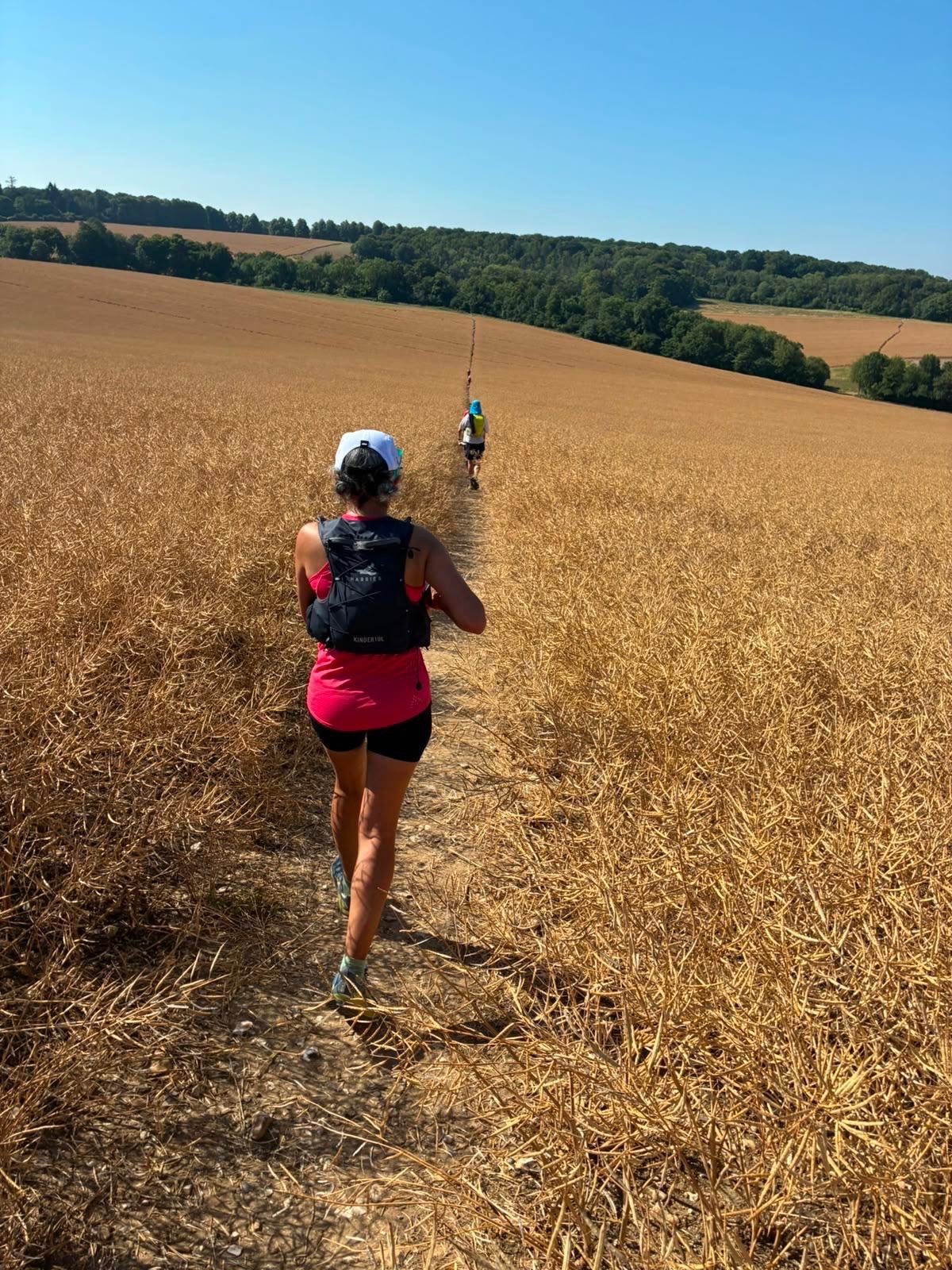
The Ridgeway
The Taper. When the Physical Work Is Done but the Mind Keeps Running
Anyone who has trained for a significant endurance event will probably recognise the phrase taper tantrums. Annie certainly experienced them. During the final weeks, her nerves fluctuated. There were questions about the unknown, doubts about what lay ahead and the strange feeling of doing less training after months of preparation.
Fortunately, she was busy, which helped keep her mind occupied. Gradually, those nerves changed into something else.
Acceptance.
She had completed the preparation. The fitness was there. There was little to gain from trying to squeeze in more training.
The purpose of the taper was to reduce accumulated fatigue while retaining the fitness and adaptations developed during the preceding weeks. That also included a meet up to discuss race day. For Annie, it worked. She arrived at race week feeling full of energy and had prioritised getting as much sleep as possible.
There was one last minute equipment issue. A newer pair of shoes proved uncomfortable, so she sensibly returned to her older, trusted pair. A small decision, perhaps, but an important one. When you're about to cover 100km, familiarity and comfort can be more valuable than something new.
Race Day. Discipline Over Excitement!
The atmosphere at the start of a major event can make it incredibly easy to run too quickly. Fresh legs, excitement, other runners moving past you and the temptation to bank some time, but one of the strongest aspects of Annie's race was her discipline.
We had developed a pacing strategy based around controlling effort, using heart rate as a guide rather than chasing a particular pace.
Her approach was simple:
Run the flats and descents where appropriate.
Hike the climbs.
Keep the effort controlled.
Avoid getting drawn into someone else's race.
This wasn't about being slow or conservative for the sake of it. It was about managing the physiological cost of the early kilometres so that she could continue moving effectively later in the event. As fatigue develops, heart rate, perceived exertion, terrain and environmental conditions all influence how an athlete should regulate effort.
Heart rate was a useful guide, till later on once cardiac drift had taken effect, then it was down to perceived effort, but the wider principle was maintaining a sustainable intensity. Annie executed that strategy exceptionally well.
Fuelling the Distance!
Nutrition and hydration can become major challenges during ultramarathons. The longer an event continues, the more important it becomes to maintain an appropriate intake while managing appetite, gastrointestinal comfort and personal preferences.
Annie's approach included electrolytes, Pure Sport products, peanut butter and Marmite sandwiches, and potatoes. She particularly enjoyed the watermelon flavoured drink! It wasn't all gels and carefully packaged sports nutrition. Familiar, palatable foods played their part.
One thing she did miss was having access to tea or coffee. That's worth remembering, over a long event the practical and psychological value of familiar food and drink shouldn't be underestimated.
Following the race, Annie identified hydration as one of the three things she managed particularly well. For future events, we'll continue refining her nutritional approach around what worked, what she enjoyed and what was practical to carry or access.
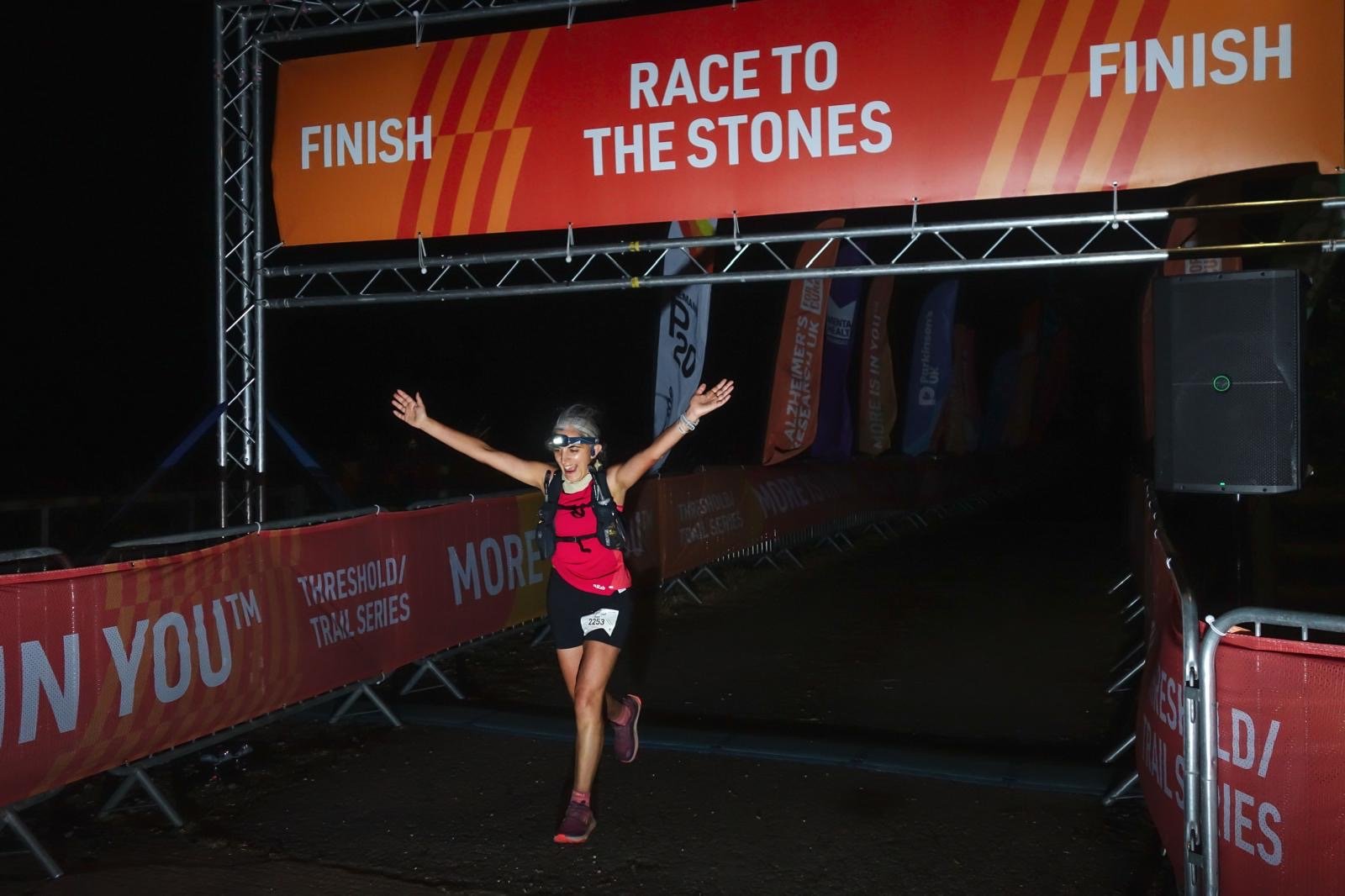
The Finish line
Into the Darkness. The Real Test
Despite the distance, Annie reported feeling physically good throughout much of the event. That doesn't mean it was easy. Running through the darkness brought a different kind of fatigue. After hours on her feet, the mental demands became increasingly significant.
At approximately 72km, Annie experienced her lowest point. Yet something particularly interesting emerged from our post-race conversation. Quitting never crossed her mind. She was tired, but she remained positive, and when I asked what she was most proud of, it wasn't simply completing the distance, it was how she had pushed herself during the second half and maintained such a positive mindset.
This is an important distinction.
Mental resilience isn't necessarily about ignoring discomfort or forcing yourself through every situation. It's about being able to assess what you're experiencing, regulate your response and continue making sensible decisions when things become difficult.
Annie's preparation had given her experience of managing fatigue, but race day still required her to apply that experience over a distance she'd never previously completed.
Then, at 85km, something changed. She knew she was going to finish.
After months of training, nervous anticipation and uncertainty, the possibility had become a reality.
There was still 15km to cover, but the doubt about whether she could complete 100km had finally disappeared.
The Finish Line. More Than a Medal!
Annie crossed the finish line having completed her first 100km ultramarathon. She felt proud, loved the event and described feeling privileged to have finished. But perhaps the most revealing part of our conversation was her surprise at what she had achieved.
She hadn't been entirely sure she could run and finish 100km, and now she had. As a coach, that's a wonderful outcome to witness. We can measure training duration, intensity, heart rate, running performance and progression. What is harder to quantify is the change in someone's belief about their own capabilities.
Completing an event like Race to the Stones doesn't just provide a finishing result.
It provides personal evidence of what sustained preparation, good decision making and determination can achieve.
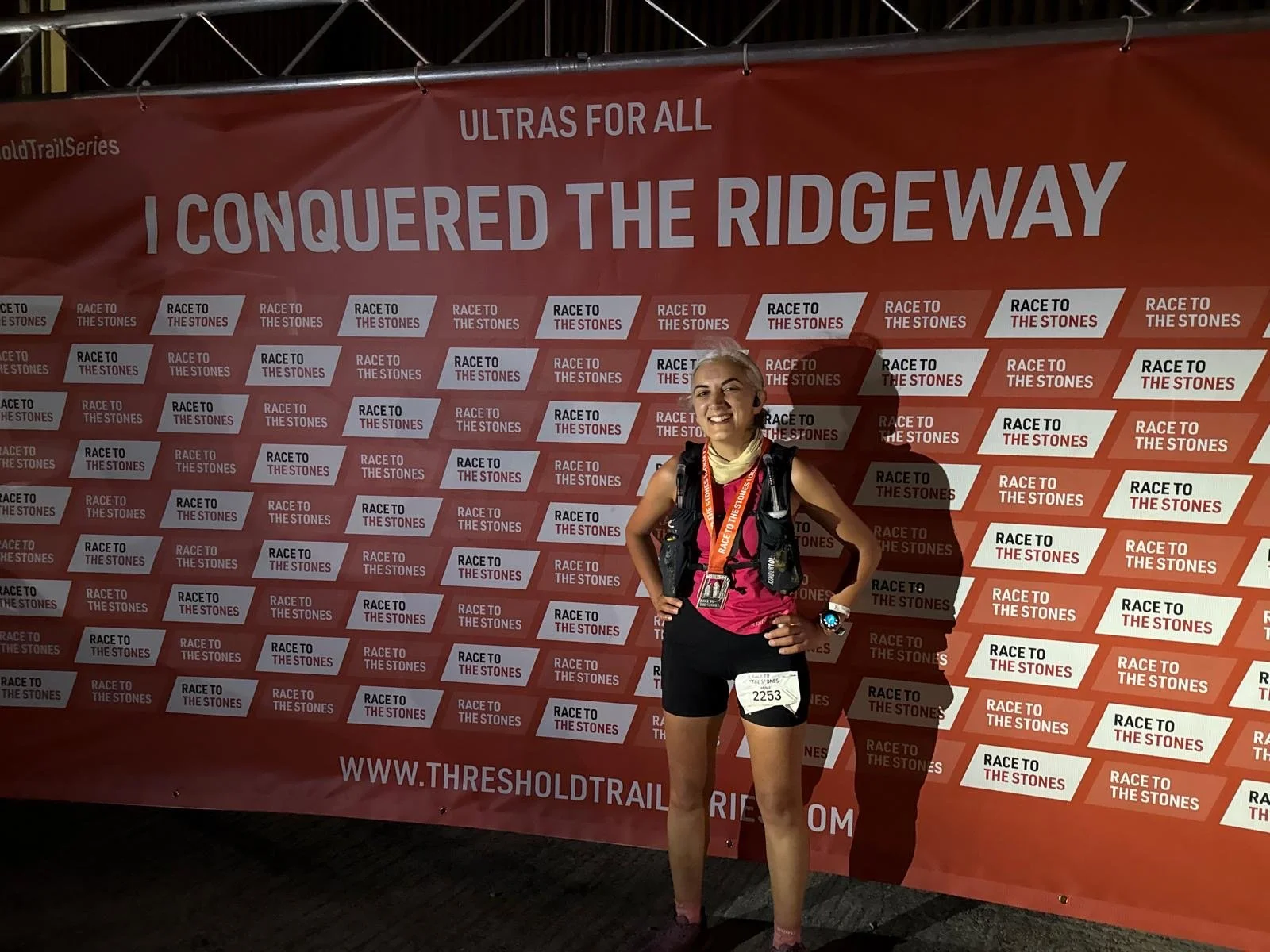
Reality sinks in, she did it
What Went Well, and What Would Annie Change?
One of the most valuable parts of coaching happens after the finish line. A debrief allows us to understand what worked, identify opportunities for improvement and use that information to shape future training. When I asked Annie to identify three things she had managed particularly well, her answers were…….
Pacing. Hydration. Mindset.
Three fundamental elements of successful ultramarathon performance. Her pacing strategy helped her manage the demands of the distance. Her hydration approach worked well for her, and mentally she remained positive even during the most challenging sections.
But there were also lessons.
Be Prepared to Adapt!
Even the best race plan needs flexibility. Annie recognised the importance of being willing to change her approach as conditions and circumstances develop.
A race strategy should guide decisions, not restrict them.
Could She Have Pushed Harder?
Looking back, Annie felt she might have been able to push a little harder during the second half. This is an interesting coaching discussion.
For a first 100km, I'd much rather see an athlete execute a controlled race and finish strongly than chase an ambitious pace early and struggle badly later. Her feeling that she had something left to give is valuable information. It doesn't mean her original strategy was wrong, it means we now have a successful experience from which to develop a more ambitious approach in the future.
Time Spent at Aid Stations!
Annie also identified reducing time spent at checkpoints as an opportunity. Over a long event, small delays can accumulate. Having a clear plan for food, fluids, kit and departure can improve efficiency without sacrificing essential recovery or safety.
Equipment and Practical Lessons!
Her trusted shoes performed brilliantly, and she finished without blisters. However, she wasn't particularly impressed with her Harrier hydration vest and will look for an alternative. She also identified the need for a long sleeved top for future events and wants to learn how to use running poles effectively.
These are the practical lessons that only become fully apparent through experience. Finally, something I'd encourage every runner to remember:
Don't worry about what everyone else is doing.
Different athletes have different abilities, goals and strategies. The quickest way to abandon a sensible race plan is to start running someone else's race.
A Coach's Reflection. Training the Individual
There is no single perfect programme for preparing someone to run 100km. Training history, physical capacity, available time, recovery, personal circumstances and individual goals all influence the approach.
Annie's programme wasn't designed to demonstrate that one particular method is superior. It was designed to prepare Annie.
The combination of aerobic training, steady state running, hill sessions, progressive long runs, back to back weekends, strength and conditioning, and recovery provided a structured approach to the demands of her event.
But a training plan is only one part of the process. Annie still had to complete the work, manage the uncertainty, make decisions during the race and keep moving when things became difficult.
And she did.
Her experience also reinforces something I believe strongly as a coach.
The aim isn't simply to create an athlete who can follow a training plan. It's to develop an athlete who understands their training, trusts their preparation and can make informed decisions independently.
Annie demonstrated those qualities throughout Race to the Stones.
Beyond 100km
There will be more races, different challenges and plenty of opportunities to apply what she's learned. Perhaps she'll pace more ambitiously next time. Perhaps she'll spend less time at checkpoints, experiment with poles or find that perfect hydration vest, but one thing has changed permanently, she no longer has to wonder whether she can complete a 100km ultramarathon.
She knows she can.
That knowledge is worth far more than a finishing time.
Annie didn't arrive at the start line knowing she could run 100km. She arrived prepared to find out. She left with her answer.