

Finding the Balance. Jennie’s first 100 miler
Preparing for your first 100 mile race is a big commitment. Preparing around a full time job, family and everything else life throws at you adds another layer.
For Jennie Waters, the challenge was the Rollin’ 100 in Shropshire. As her coach, my job was to help her prepare for that distance while respecting the person taking it on. Her experience, her concerns, her available time and her life outside running.
Jennie has her own explanation for signing up……
“I clearly hit my head much harder than I expected when I gave myself a concussion.”
Her humour comes through, but so does the scale of the challenge. When she’s sidelined from running, Jennie says she has a habit of entering something scary. This time, she had gone well beyond her comfort zone.
“It’s a distance I thought I would never do, and it was a challenge that made my stomach churn thinking about.”
She knew she could cover 50 miles. Doubling that was a very different prospect.
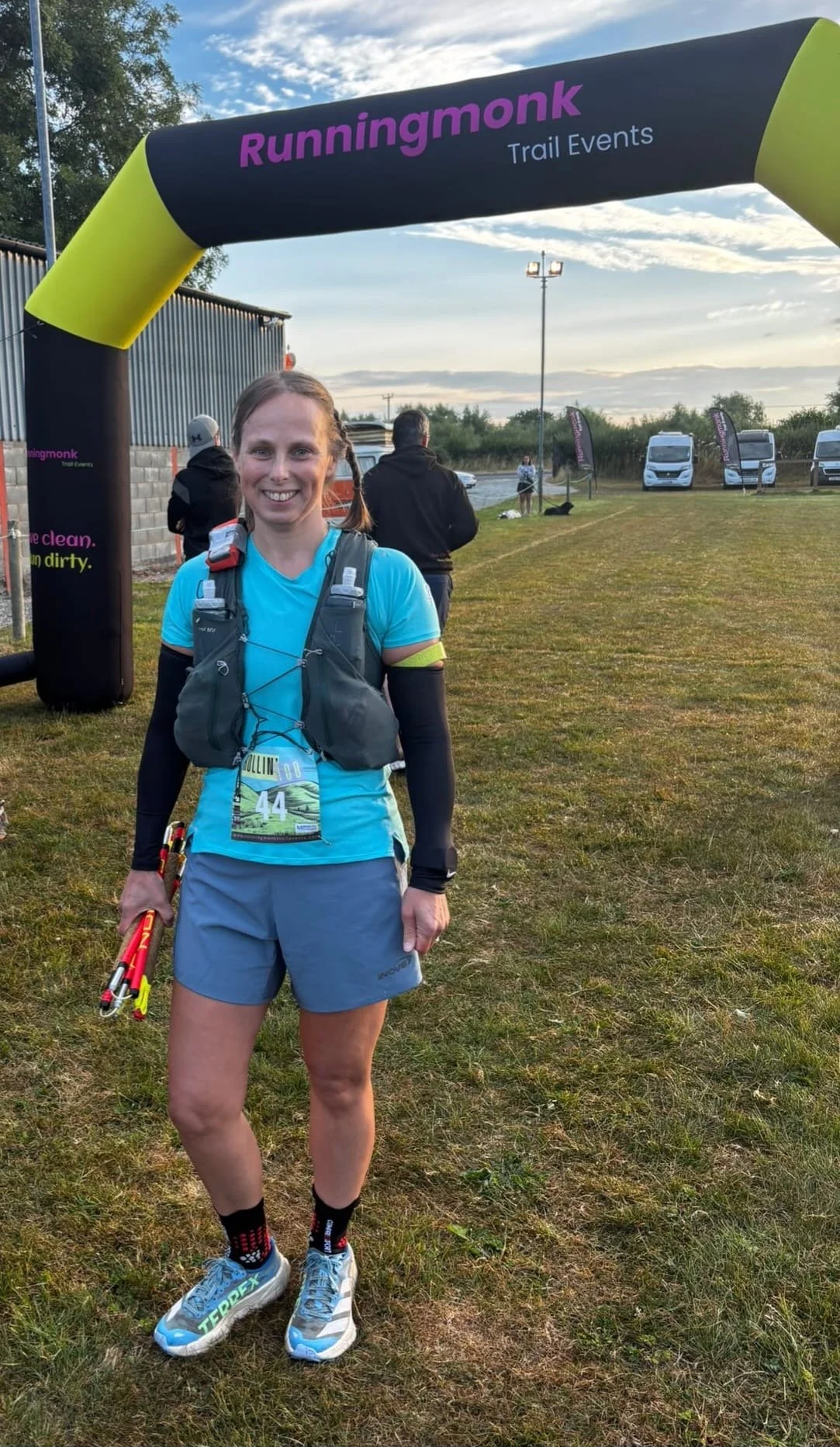
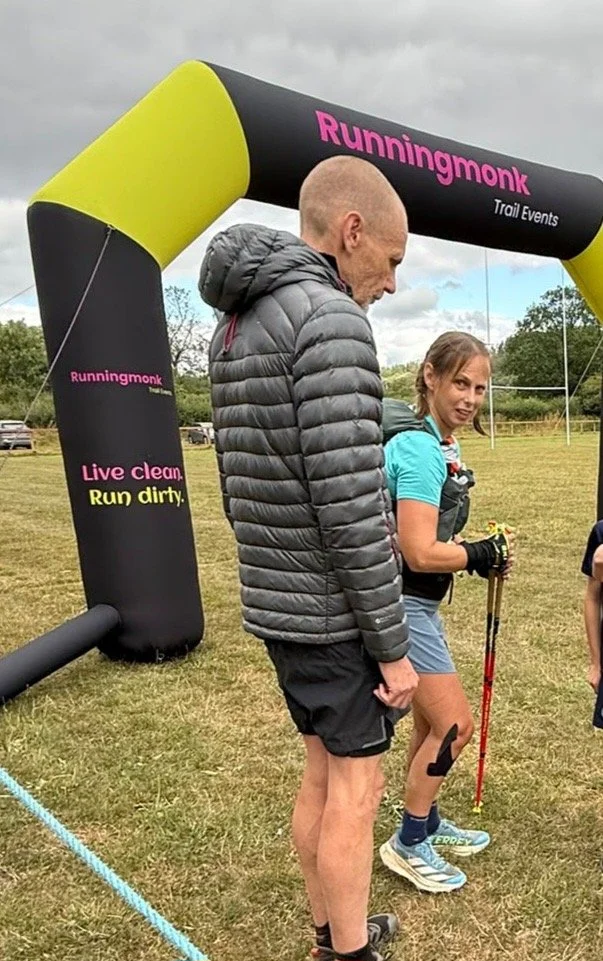
At the start, eager to get going.
Getting to the start line
Jennie chose the Rollin’ 100 because it was relatively local, making it easier for friends to support her. The inclusive organisers and absence of a cut off also appealed. Her biggest concern though, came before race day….. injury.
“I’m in my 50s, and my tendons aren’t as forgiving as they used to be.”
That helped shape our approach. We needed to build endurance and confidence while managing the training load carefully enough to give her a good chance of reaching the start line healthy.
The final three months of her plan show that balance. Easy running, longer outings, power hiking, steady state efforts, strength work, yoga and mobility. There were bigger training weeks, but also weeks where we pulled things back.
Those months sat on top of a longer foundation. Jennie points to at least six months of fairly consistent training, despite life throwing plenty at her, as an important part of feeling prepared.
Making the training fit the athlete
With work and family commitments, every session needed a purpose. One important session was a 90 minute endurance run incorporating steady state efforts, these are controlled periods of sustained work within the run. These gave us a way to include purposeful endurance training within a manageable window. They sat alongside the longer runs, rather than replacing them. Her preparation also included outings of up to four hours, selected consecutive long run days and a 50k race on the route.
Those longer experiences mattered to Jennie:
“I get confidence from longer runs.”
The balance was between giving her that confidence and avoiding the temptation to keep adding more. Interestingly, one of the sessions that surprised her most was the steady state running:
“I now know why they were included.”
For me, that is a useful reminder that the value of a session isn’t always obvious while you’re doing it. Sometimes it becomes clearer much further down the trail.
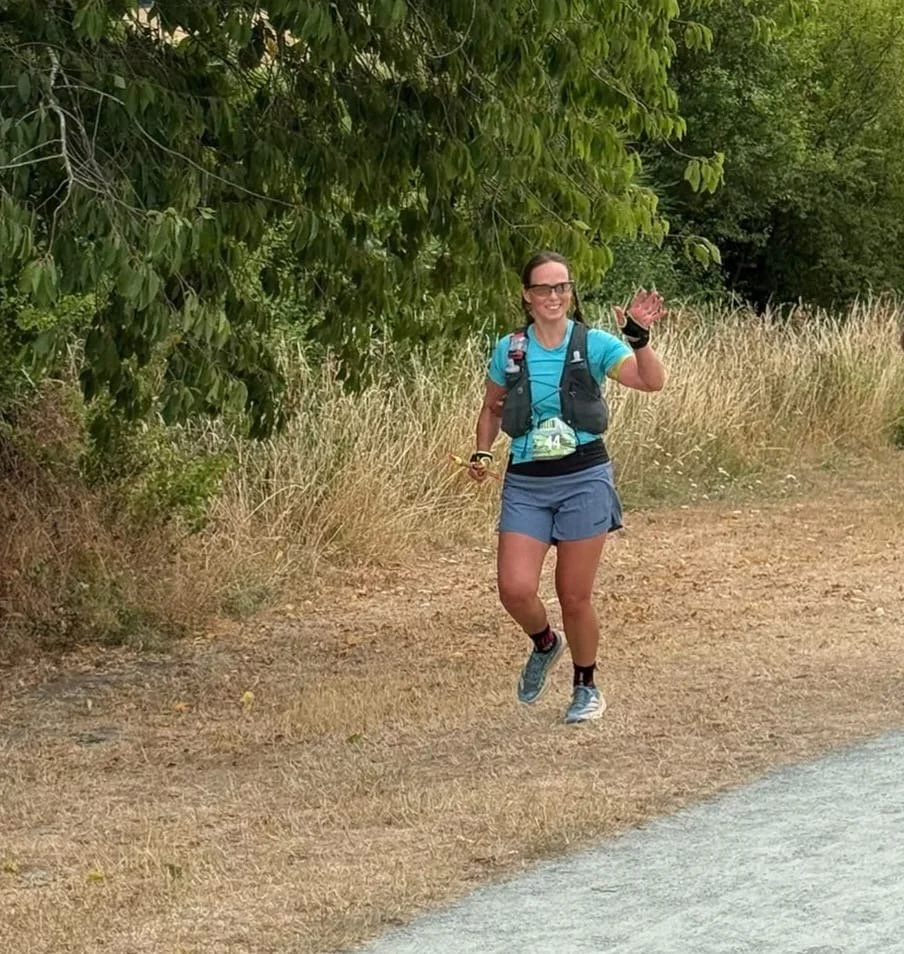
Marathon distance in!
Strength, mobility and knowing when to hold back
My UESCA ultrarunning education and Level 4 strength and conditioning background informed the planning, organising training into blocks, managing progression and adjusting the work around Jennie.
Strength and conditioning was a regular part of that preparation, with unilateral work, training one side at a time, and conditioning aimed at supporting her ability to tolerate the demands of running. Yoga and mobility also had their place.
The intention was to support consistent training and mitigate injury risk. No programme can guarantee an injury free build up to a race.
When I asked Jennie what coaching had contributed, her answer was straightforward.
“Accountability, S&C, and not doing too much. You got me to the start line in one piece. Easier said than done.”
We also discussed kit and mental preparation, including scenarios she hadn’t considered. This was an individual approach. Another athlete, with a different history, schedule or capacity to recover, might need something quite different.
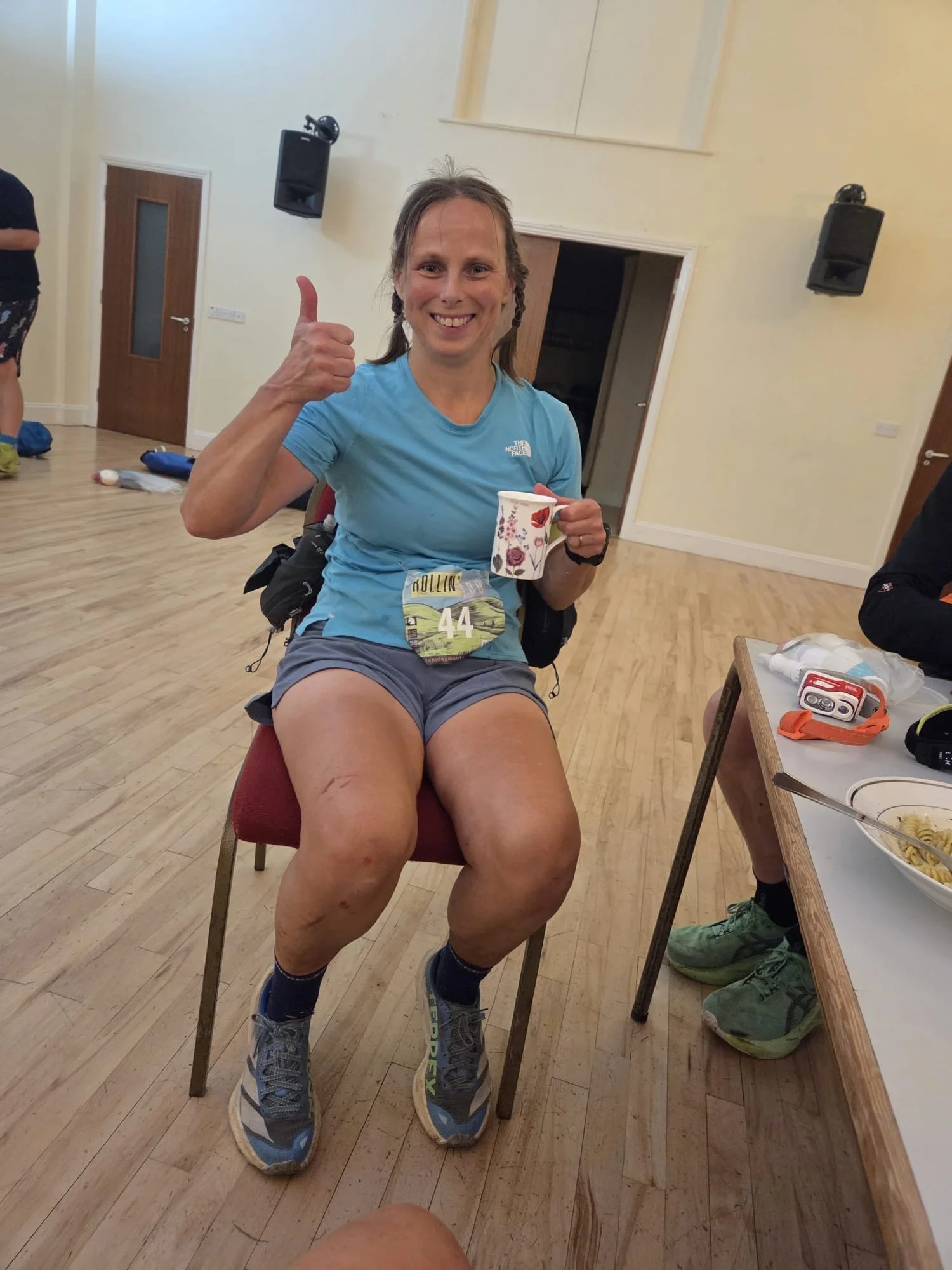
Trying to fuel at 47 miles
When the race changed the plan
Jennie arrived with a fuelling and hydration strategy she had tested. In the humid conditions, it became increasingly difficult to make that strategy work.
What she had managed over shorter training outings wasn’t translating to the same experience over 100 miles. By around halfway, she felt she had dug herself into a hole and needed more time at an aid station to get food down.
She changed from hydration mix in both flasks to hydration mix in one and water in the other. Huel and Precision 90g gels became the foods she could stomach, and she credits them with helping her finish.
It’s an honest part of her account. Preparation gave her a starting plan, but race day demanded adjustments.
Power hiking also proved particularly valuable.
“Even injured, I was able to continue at a decent pace all the way to the finish.”
That is Jennie’s experience of this race, rather than advice to continue through an injury. From a coaching perspective, it does underline why we had treated hiking as a skill worth practising.
Twelve miles can feel a very long way
Jennie’s toughest moment came with around 12 miles remaining. She had already been in considerable pain, and ahead lay a demanding section with substantial climbing, stiles and steep ups and downs. Another woman was catching her, her crew and pacer encouraged her to hold the position, but Jennie’s priority was clear.
“I would have loved to have come 1st woman, but it wasn’t my focus or worth the risk of not finishing.”
In that moment, she understood what mattered most to her. She had entered to complete her first 100 miles, and that remained the goal.
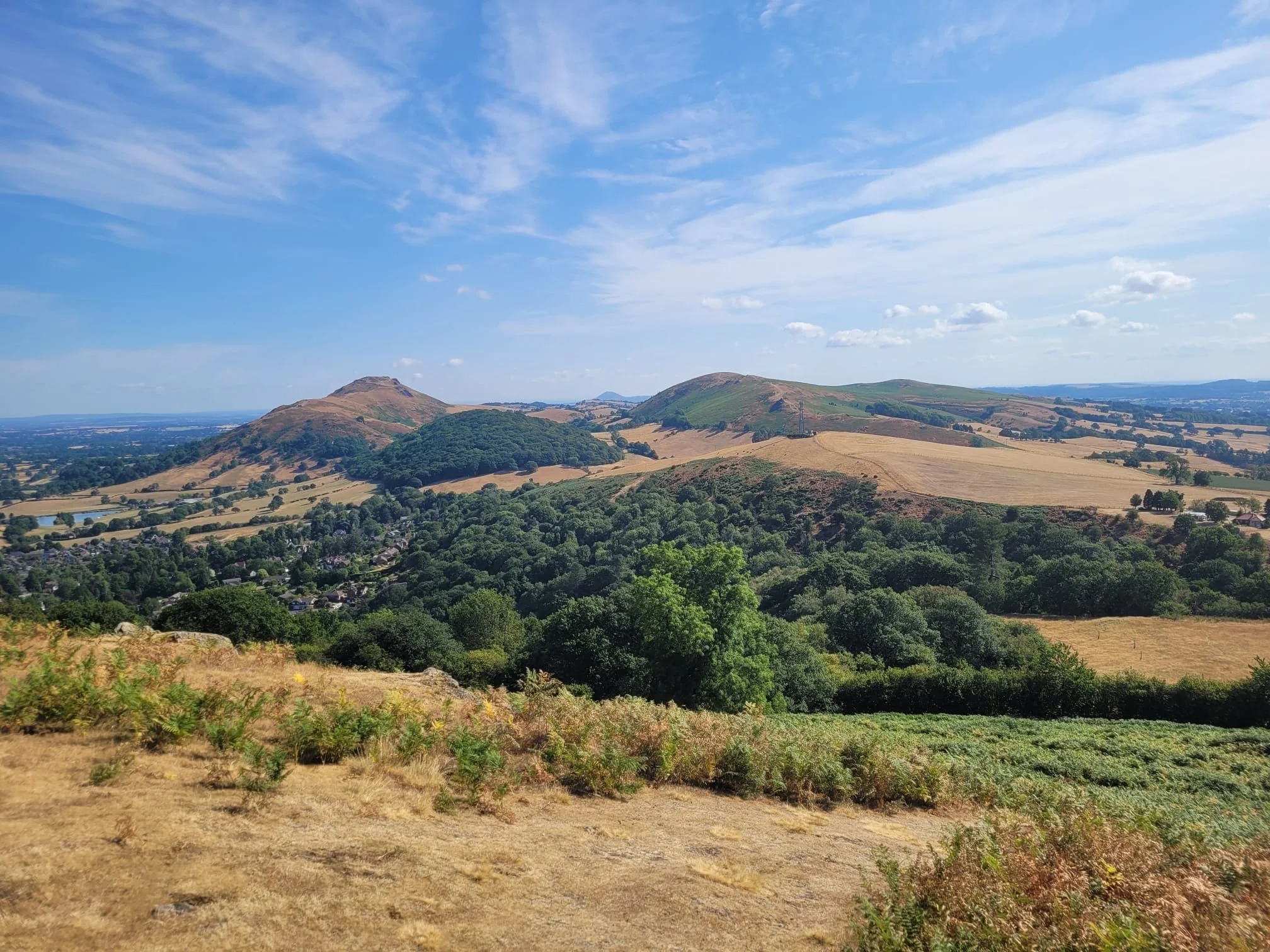
Some of the amazing Shropshire route
What finishing meant!
Her first feeling at the finish was huge relief. As she reflected, the achievement meant much more.
“I’m really proud that I finished the race. It didn’t go to plan, and I was in a lot of pain for the last 30 miles.”
She had taken on a distance she once thought she would never attempt. The outcome had never felt guaranteed.
As her coach, I’m proud of the consistency behind that finish, fitting training around a demanding life, doing the strength work, building confidence and accepting that sometimes the right decision was to do less.
Her result doesn’t make this a universal blueprint for running 100 miles. It shows how we approached one athlete’s challenge, using training principles to guide decisions around her individual needs.
Jennie’s advice to anyone considering their first 100-miler deserves the final word,
“Know your why.”
And prepare for things to go wrong. Thinking through possible problems beforehand, she says, makes them easier to deal with when you’re tired and your brain isn’t working quite as well.
One hundred miles was a step into the unknown. Jennie put in the preparation, adapted when things became difficult, and reached the finish.
Finished!