Rolling with the punches: TRANS GRAN CANARIA
Quick, tell me what you would expect from a race in Gran Canaria.
If you were to pick some words out they would probably be along the lines of “hot”, “dry”, “dusty”, maybe “sunshine”, right?
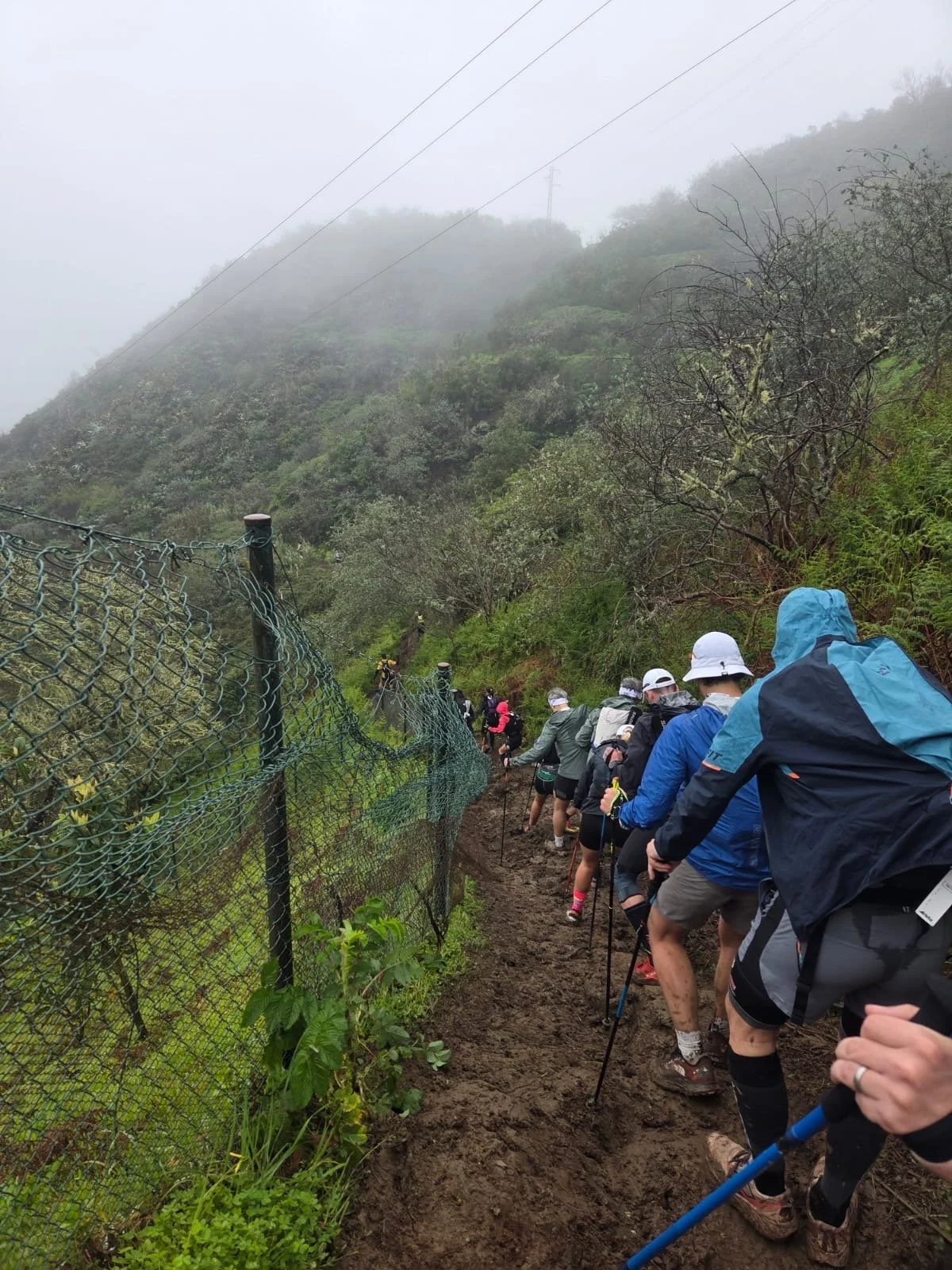
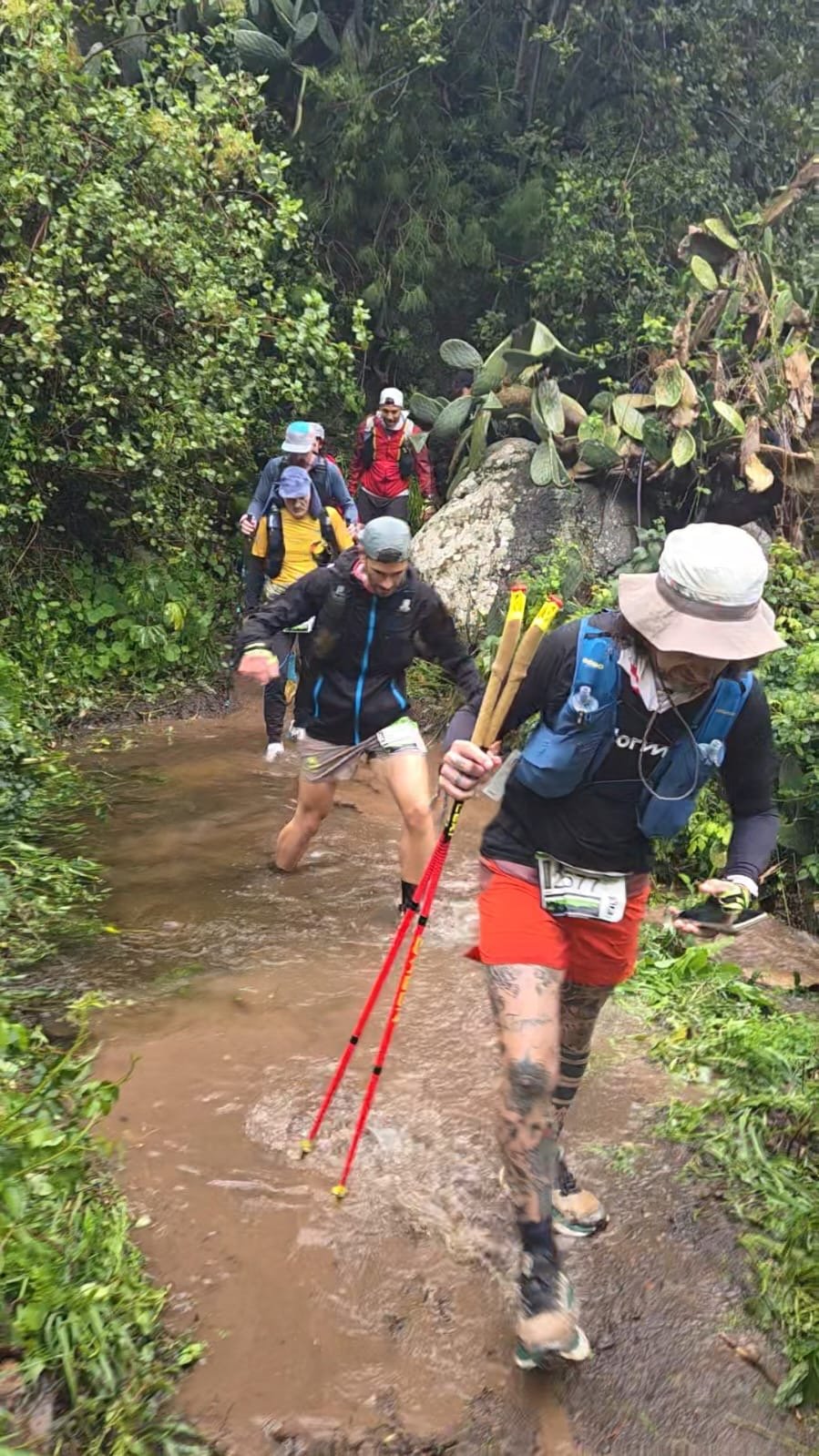
Well, the 2026 edition was a lot of things, but it was none of those! Coming in as one of the worst years in a long time in terms of conditions, runners were treated to near-freezing temperatures, thick mud, flooded trails and views hidden in low-lying cloud and mist.
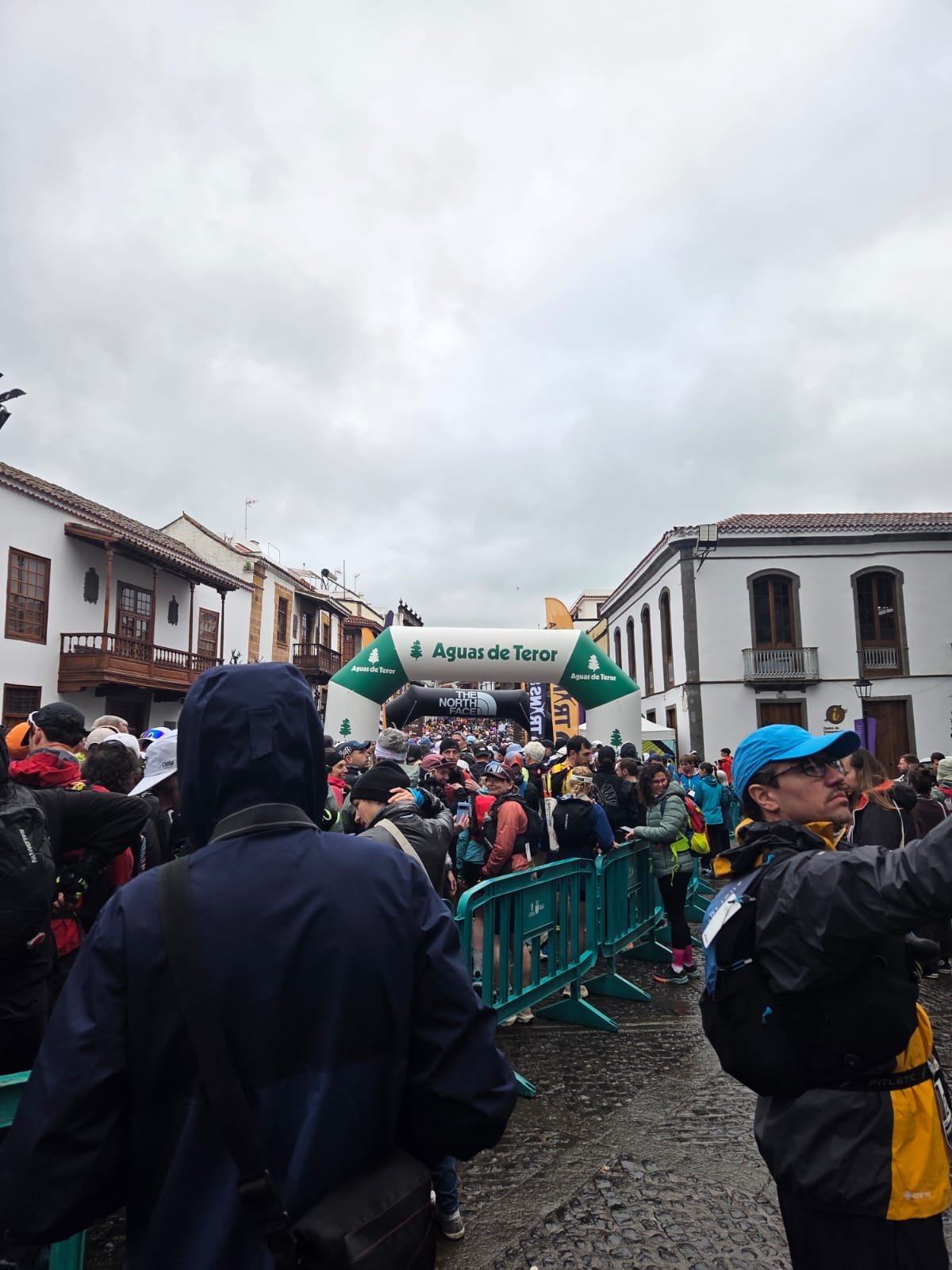
The race, as I signed up for it, was 82km (50miles) from Teror on the northern side of the island to Maspalomas in the south. The route takes in around 4300m of climb, going up and over the Nublo Rural Park, the Tejeda Caldera and up over El Garrañon before dropping down to the finish line. It’s a continent in miniature, going from jungle-like lush greenery, through pine forest, and finishing in the desert. Runners set out at 9am and have 21 hours to complete the course.
For those on the Advanced course as well as on the Classic 125km race there was an opportunity to use a drop bag at El Garrañon, and the race is well supported with aid stations roughly every 10-ish km, which makes it ideal for an uncrewed runner.
Training for 82km in the mountains
Although I have been running ultras for coming up on 10 years now, my transition to big-mountain running has been a slow one over the last 4 or so years. This has been deliberate, as the feel is completely different to anything we have in the UK, and rather than immediately jumping into the biggest or most impressive-sounding events I could get my hands on, I wanted to allow the time to really be a student of this new type of running while falling in love with the terrain, the expansive views, the community and the sense of adventure that came with running in high-mountain ranges. Over the last few years I have done a few races in the Alps, but consciously kept them at marathon distance and shorter to allow opportunities to stay in the area and play (read: have more adventures) after finishing.
Transgrancanaria was my first go at putting myself in the ring for an event of that length and elevation, and going in, I had absolutely no idea if I could even finish it within cutoff. This is a good thing – as a coach I try to lead by example, and actually finishing was less important than having the courage to try.
The training started in October, right after taking some time for recovery from my last A race of the 2025 season. Working with my own coach, we knew a few things going in about where I was at:
I had years of ultra-distance experience, so running 50 miles was not a problem
I had done races which required being on my feet for >20hours, so the time on feet was not a problem
The most elevation I had done in a day before was around the 3000m mark, and not within the constraints of working to cutoffs
Given that I was training for a race that is notorious for being hot, dry and hardpacked, where most of the first half would be mostly climbing and the back half of the race would be mostly descending, run training was primarily focused on building raw fitness and muscular resilience. With that in mind, my training was structured to be specific, consistent and focused to the conditions we were expecting on the course. Most weeks would feature around 6-8 hours of run training, and 1-2 hours of strength training as a baseline. Within each week that training would include:
Slow, easy running: most of my training was at an easy, conversational pace to build the volume tolerance without over-straining my system.
Speedwork: even though the race included 4000+ metres of climb, it was important to include intervals and fast running to build my ability to run – and run hard – whenever the terrain allowed, which requires building a really robust engine and the ability to push hard for extended periods of time.
Uphill sessions: while in the early portion of the training block these sessions were on local hill segments doing repeats and continuous hills sessions to start building the engine for climbing, as the block continued these sessions transitioned to targeted sessions on the treadmill to simulate the extended climbs I would be dealing with in the race. These varied in length and intensity, but the overall aim was the same – learn to work really hard going uphill without ever tipping over the edge of blowing out.
Long runs: most weeks would feature a run of 2+ hours to really lock in the ability to maintain focus and effort on tired legs. Given that we had snow and ice in Birmingham during some of the critical weeks of the block, and the fact that the trails locally have been a mud slide for months, a good portion of these long runs were also done on the treadmill. This meant that I could set the incline at 3-5% and just practice running uphill for extended periods of time, in temperatures a bit closer to expected race conditions while learning to fuel to plan. The longest run of the entire training cycle topped out at around 7 hours on the trails.
Strength and conditioning: every week I would include 2 sessions in the gym focusing on building power and endurance in the back train for the climbs, and resilience in my quads, core and tendons for the descents. As the block developed, these sessions became less general and more specific to the expected terrain, including working on my tendons, balance and overall alignment to ensure that nothing would blow out when running downhill for 30+ km on technical terrain. I also included working on upper body and core strength knowing I would be carrying a pack and using poles for an extended period. None of the sessions were more than an hour, and none of them were flashy – I did a lot of them with just a pair of 10kg dumbbells and a 14kg kettlebell, and my legs were still jelly by the end!
Stair machine climbs: though there were fewer stair machine sessions than you might imagine, these were placed strategically to simulate how the climbs would go from long and steady, to kicking up into steep and technical for sections. The inclusion of time on the stair machine was to teach my legs to run again after those climbs; and again, to make use of climbing for an extended period in temperatures closer to those expected on race day.
Hot baths: yes, these were literally on my training plan! Because temperatures at Transgrancanaria usually sit in the low to mid-twenties, there were 3-4 hot baths each week as part of my weekly training for the last 8-10 weeks of the block to build heat tolerance during the British winter. The fact that they were a godsend for muscle recovery was just another great reason to keep them in the plan (and they are staying after the race too!).
The aim of the entire program was steady, consistent progress with enough buffer built into the plan that when I got hit with a virus in December which took me out of training for a few weeks, there was still a solid amount of work behind me, and I was able to get back into peak training once I’d recovered fully. If anything, the few weeks off meant I was coming in fresher to the peak weeks, which also helped to stave off any panic.
Whatever happened, the aim was to get to that start line knowing that I had worked really, really hard preparing for this race and focusing on the process rather than a specific performance outcome.
Race day – when all you can control, is you
After months of training specifically for a race that was hot, dry and fast you can imagine my dismay when conditions were more akin to an early spring day up on the Peaks than to an island best known for tourists baking by the pool!
From the outset the mud and water crossings early in the course meant that people were moving slowly – often at a complete standstill waiting to pass through the narrower parts of the trail coming out of Teror. In some ways this was a bit of a blessing in that it meant I didn’t have the experience I feared of being left in everyone’s dust and on my own for the entire route, but it did mean I went through the first checkpoint with only 5 minutes up on the cut-offs, which added a certain amount of time pressure in the early stages.
Something that very quickly became useful was the experience I have built over the years from doing self-supported adventures and FKTs. The habits built from long days out managing admin and staying efficient without the luxury of having someone to complain to, or who could pull me out if needed, meant that I made sure to go through checkpoints with brutal efficiency. I had a plan coming into each one knowing exactly what I needed to do, and because I had planned my fuelling to be 90% self-reliant, at each one I went in, topped up water, grabbed a few chunks of orange and a nutella sandwich, and half a cup of coke to sip on the way out. I was in and out within about 5 minutes at each one, and this started paying off from around CP2 when I started catching other runners I hadn’t seen in hours.
The great thing with the climbs at Transgrancanaria is that they aren’t like the mountains I had been learning on in the French Alps – while we were still getting climbs of 1000m, they weren’t super steep and they weren’t especially technical for a lot of the way. There were also little patches of respite where the trail went fairly flat or even downhill for a stretch, and this is where those hours on the treadmill really came in clutch – throughout the day I was hiking the steeper sections of climb, but was able to break back into a run as soon as the gradient eased off or whenever the trail opened out. This allowed me to not only catch up and overtake other runners but gave my muscles little breaks where I would be moving differently which kept anything from seizing up. It also meant that from start to finish I was fuelling well, having practiced doing so throughout my training in the winter.
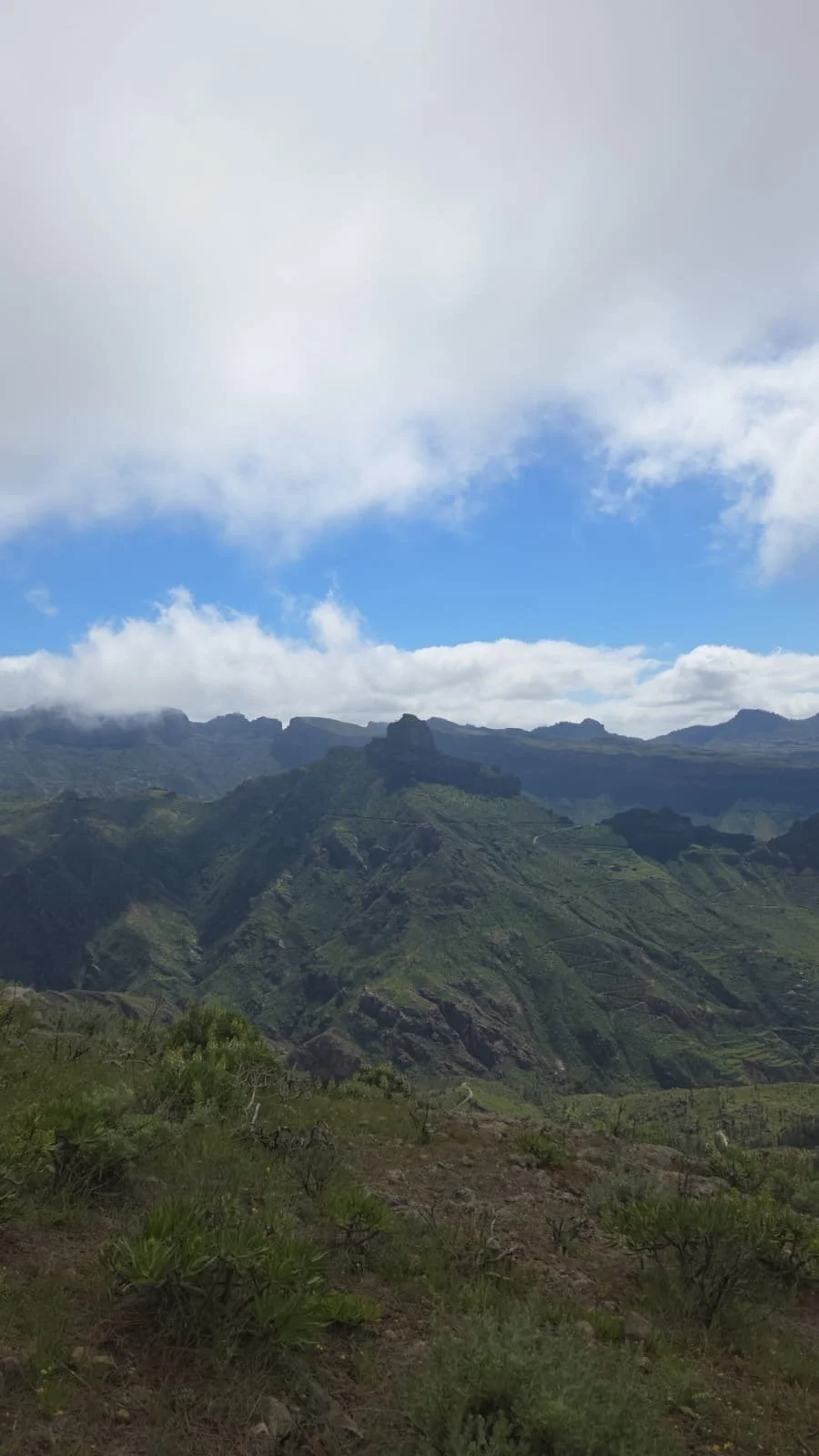
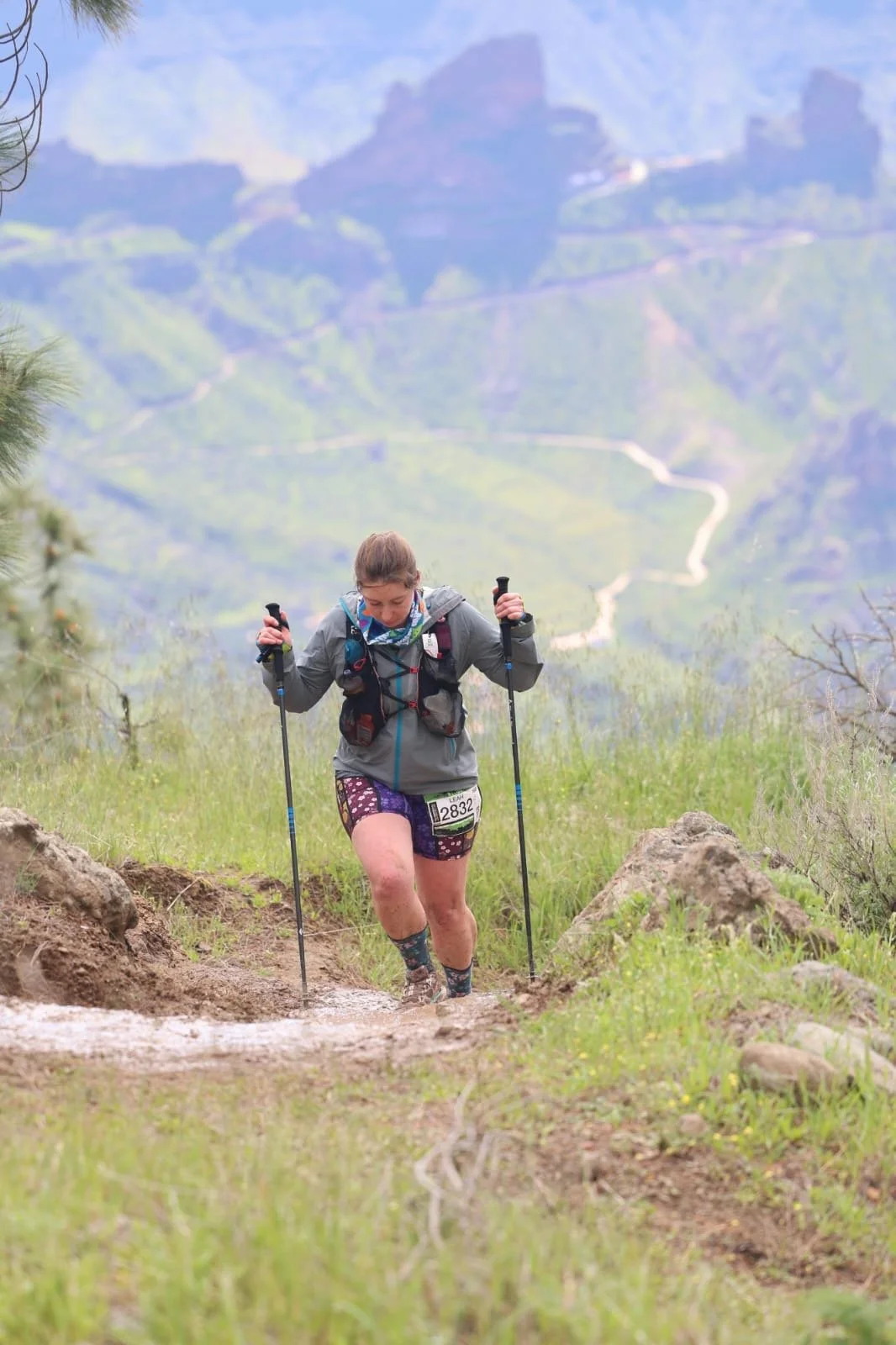
At around 30km into the race I was clear of CP2 with a decent margin and going into the chunkiest set of climbs for the day, and this was when I started actually feeling good. With the weather as it was I was still in my long sleeves and indeed needed my waterproof jacket and gloves for a lot of the race especially high up, but the middle section of the route was when things started to flow. I was tapping out the climbs using my poles, literally visualising myself chipping away at the distance piece by tiny piece. There were more runners around me at that stage and it was so much fun making friends out on the course, chatting up a storm with folks on both my race and runners on the Classic who I had started to catch up with – sometimes in multiple languages at once! Feeling that community spirit and being able to enjoy the camaraderie amongst all of us out in the weather made the miles roll by, especially in the few hours when the sun came out and the views opened out.
When I got into El Garrañon it had just gotten dark. My immediate concern was getting to my drop bag to change out my sweaty t-shirt and sleeves: I have a vivid memory of shivering outside the hut with another German girl as we layered up with fresh long sleeved tops, thermal layers and jackets while laughing about how ridiculous it was that this was in Spain of all places. As soon as I had changed and grabbed the gels and chews I’d be fuelling with for the back half of the race I hit the checkpoint for my one stop of the day – to inhale half a cup of sweet coffee and a small portion of pasta. I knew from experience that taking a few minutes to get a good feed and get warm can make the difference later on so decided it was worthwhile taking 15-20mins there. It was absolutely the right decision – from El Garrañon I hit the forest tracks and the long descent in great spirits and feeling good physically. For the next 30-40km into the finish I was able to run strong and consistently, using the more open tracks through the forest to make up time and places with every mile.
In this back end of the race the terrain finally got rockier and more technical, more what I had been expecting from a race across Gran Canaria. The hours spent strength training to build downhill muscle did not entirely stop my legs turning to pudding, but what they did do was allow me to run every section that was open and non-technical enough for me to attack it. Between the drop bag and the finish, I made up 28 places – partly because I was still able to run, and partly because I stayed efficient through the last couple of aid stations. I ran those last 30km like I was being chased, using my poles for balance and a bit of extra propulsion. There were a couple of nasty little climbs amongst the downhill, and it was satisfying eating up the ascents and picking people off as I went, mentally marking whether they were in my race or on the Classic, and soaking up the little interactions as we went: little shouts of “animo!” and “que fuerte!” between runners all gutting it out for a finish.
The last 10(ish) km of the route go down the notorious dry river bed – if you’ve ever been on a pebble beach in the UK, it’s that but a bit pointier. Many runners slow to almost a crawl on this stretch (it’s part of the Classic, Advanced and Marathon routes). What I found both surprising and encouraging is that again, those hours of consistent, unflashy training meant that in the sections where there was a bit of sandy or less stony trail, I was able to put the poles away and run pretty smoothly. This held me out right down to the finish, where I came in at a smidge under 18 hours.
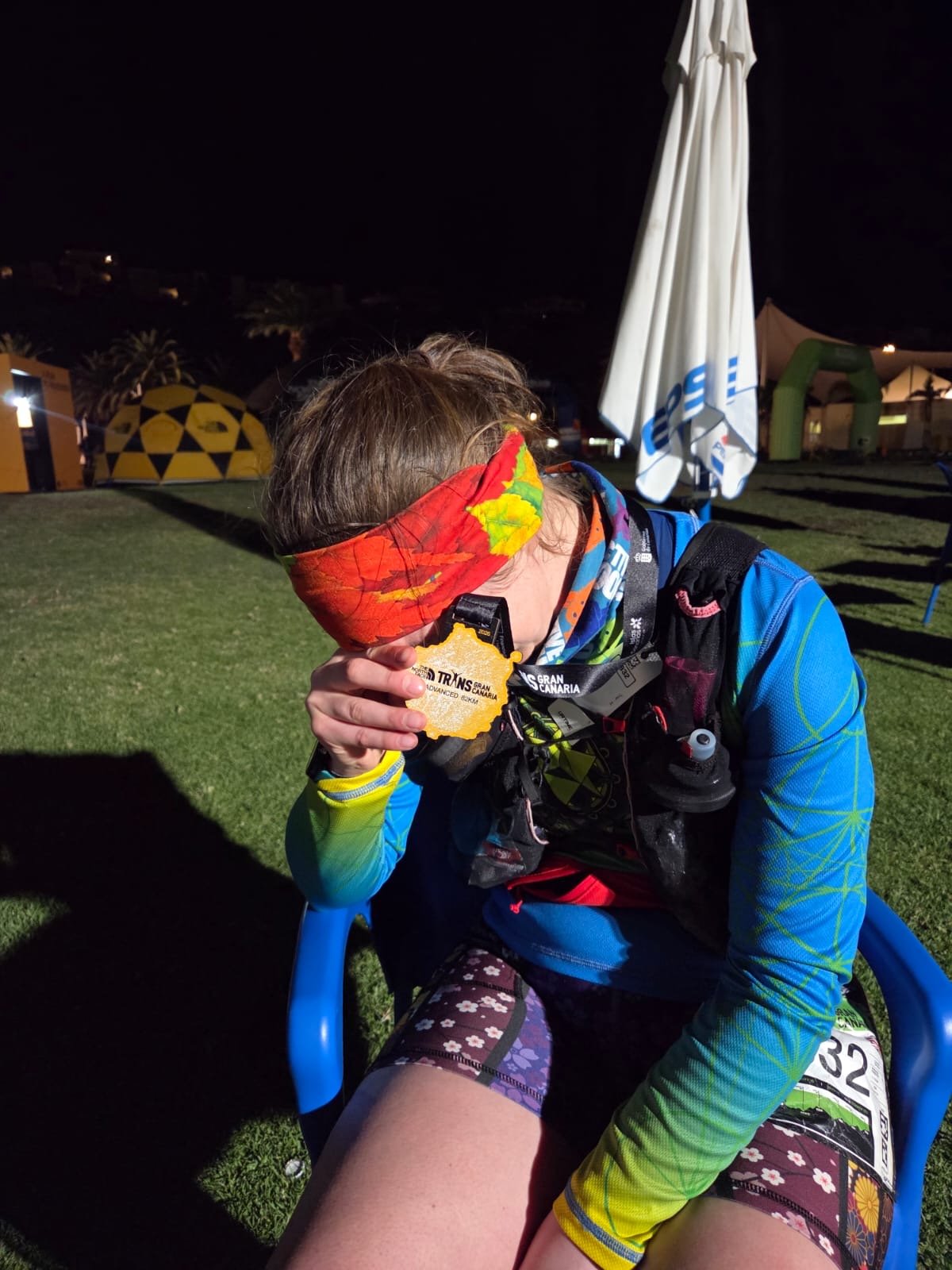
Considering I went into this race not even knowing if I could finish it within cutoff but determined to be brave enough to have a go, I was and still am over the moon with how the race went. While none of us could control the weather or the mud, by focussing on the process aspects I could control I was able to have a fun, strong, positive experience. By managing my effort levels I was able to maintain myself for the full distance. By fuelling consistently (some post-race maths calculated it at around 70-80g carbs per hour throughout), my energy levels never dipped and I was able to maintain full focus, making good decisions and staying positive. And by focusing on efficiency – in how I packed and managed my kit, and when going through checkpoints – I was able to gain back enough time on the cutoffs so that I could fully enjoy the race without worrying about timing out. From the first session of the training cycle through to the finish line and beyond, Transgrancanaria was about the process, not the performance. And that, in the end, was everything.
What next?
Rest!
There are plenty of lessons learned from doing this event – some things to keep doing and refine, some to do a bit better in future. The main thing I’m taking into my next challenge is the power of consistent, process focussed training, and a big reminder that putting yourself in the arena is worth it, whether you finish well, finish dead last, or DNF.
One thing is for sure: this won’t be my last big-mountain race.